John Burger
Killers of the Flower MoonJohn Burger was a federal investigator whose knowledge of the earlier Osage murder inquiry made him a crucial guide to T. B. White’s renewed investigation. He brought White a map of suspects, evidence, and informants, but his record also exposed a weakness in federal work: agents’ contemptuous assumptions about the Osage had deepened distrust and obstructed the search for truth.
Experience and Place in the Investigation
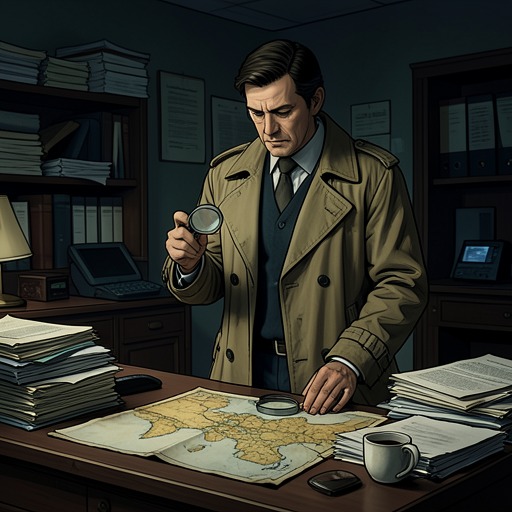
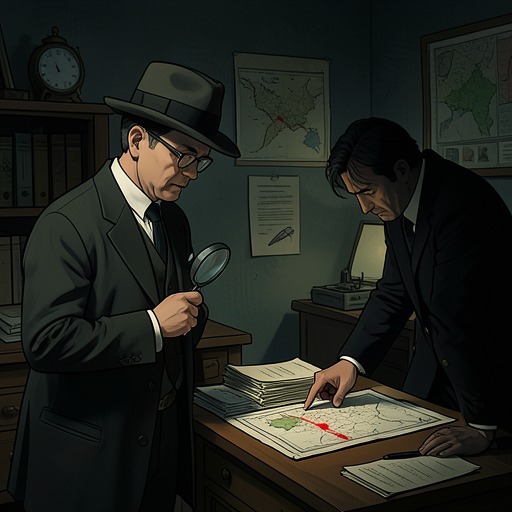
Burger had worked on the case for a year and a half before White took it up. He had pursued many of the same leads as the private investigators hired by William K. Hale, Scott Mathis, and Mollie Burkhart’s family. The accumulated knowledge mattered less as a ready-made solution than as a way to orient White in a disordered case file: Burger knew the suspects and the trails already followed, and he could distinguish useful leads from ground that had been covered.
White retained Burger as one of the few agents from the previous investigation. Unlike the undercover members of White’s new team, Burger was already well known in Osage County, so he worked openly beside White. His familiarity with the case allowed White to use earlier findings quickly, including to rule out Anna Brown’s former husband, Oda Brown. Brown’s alibi—that he had been with another woman—was corroborated. The forger who had implicated him had fabricated the story in hopes of bargaining for better conditions in prison. White also eliminated other suspects, including oil workers identified by the former sheriff Harve M. Freas.
Questioning Rose Osage and Joe Allen
Burger’s earlier work had also brought him into contact with Rose Osage and Joe Allen, both suspected in Anna Brown’s killing. He had taken them to the sheriff’s office and questioned them separately. Rose denied having quarreled or fought with Anna. Joe denied having been close to her. Each gave the same account of the night of May 21, 1921: they had been together in Pawnee, seventeen miles southwest of Gray Horse, and had stopped at a rooming house. The proprietor supported their alibi, though investigators noticed that Rose and Joe’s accounts were almost word for word alike, as if rehearsed.
The case against Rose remained contradictory. A private investigator had obtained a statement from a Kaw woman claiming that Rose confessed to killing Anna, and a Fairfax marshal reported finding a dark stain on the backseat of Rose’s car around the time of the murder. Yet when Burger questioned Rose, she denied involvement; later, she gave the same denial to his informant, Kelsie Morrison. White weighed those accounts against the corroborated alibi and the physical evidence. The account of the alleged confession placed Anna in Rose’s car before her body was dumped at Three Mile Creek, but the autopsy described no signs that the body had been moved after death, and investigators had reported no blood trail from a car to the creek. Burger’s records supplied leads; they did not make every allegation reliable.
Recruiting Kelsie Morrison
After Rose and Joe were released, Burger sought help from Morrison, a bootlegger and drug peddler who was close to Rose and other suspects and had once been married to an Osage woman. Morrison had fled Osage County after assaulting a local Prohibition officer. Burger and other agents traced him to Dallas, where he was using the alias Lloyd Miller. They sent a registered letter to the post-office box listed under that name and arrested him when he went to collect it. Morrison denied his identity for about an hour before admitting that he was Kelsie Morrison.
Burger described Morrison as shrewd and reckless, a self-confessed criminal whose jittery manner and constant smoking were noted in the agent’s report. The bureau made a confidential arrangement: Morrison would inform on the murder cases in return for having the assault warrant against him quashed. Burger warned headquarters not to disclose the arrangement outside the bureau. Before Morrison was released, Burger and Dallas police took eleven body measurements using Bertillonage, photographed him, and recorded his fingerprints. Burger also gave him spending money. Morrison agreed to approach Rose and Joe and other underworld contacts, while warning that discovery of his work for the federal agents could mean his death.
Informant Reports and Investigative Limits
Morrison returned with a direct report of asking Rose why she had killed Anna. Rose again denied doing so. Burger regarded Morrison as a valuable source, but the danger surrounding the assignment was plain: the informant had to move among people under suspicion while concealing his dealings with the bureau. The measurements, photograph, and fingerprints served as safeguards in case he disappeared or had to be identified again; they could not guarantee his safety or establish the truth of what he heard.
Burger’s usefulness to White existed alongside a serious failure in the earlier investigation. A joint report by Burger and another agent described the Osage through sweeping, derogatory stereotypes. Such casual prejudice, common among agents of the period, helped foster Osage distrust of federal investigators. John Wren, whom White also brought onto the team, offered an important counterweight through his experience handling sensitive cases on reservations. Burger’s detailed knowledge and informant network could advance the inquiry, but neither erased the damage done when investigators treated the people whose cooperation they needed with contempt.
The Case After Its Supposed Closure
The book’s later reassessment of the federal inquiry cautions against treating the agents’ work as a complete resolution. Authorities declared the cases closed after Hale and his conspirators received life sentences, even though the bureau had not connected Hale to all twenty-four murders. The later account identifies killings, including those of Barney McBride and W. W. Vaughan, whose perpetrators remained uncertain. That retrospective does not establish what Burger knew about those crimes; it does put the earlier investigation he helped inform in a wider frame. His importance lies in how he carried forward the case’s accumulated evidence and contacts—and in how the investigation’s remaining gaps resist the appearance of a final, tidy answer.